


Beer Marketer's Insights
Out of Chicago comes a new canned coconut water play, under name Kalena Sparkling Coconut Water. Tho brands like CocoLibre and Vita Coco have ventured sparkling entries, Kalena LLC claims it’s rare not-from-concentrate entry in sparkling sub-segment, with added attribute of containing no added sugar. Line is produced in Vietnam and certified by USDA as organic. Priced at $2.49 per 10.8-oz slim can, it’s out in broad flavor range: Original, Pineapple, Lemon, Mango, Acai, Blood Orange, Lime and Watermelon, execs at booth told us. So far brand is out mainly in Midwest and on West Coast, via DSD partners that include Lenore in San Diego and LA Distribution in LA metro.
In fluid market where categories are blurring, it can be easy to overestimate the consumer’s ability to cut thru the complexity. Count Owl’s Brew marketer Brew Lab Tea among the companies that are learning to simplify branding to ease unanticipated confusion at the store shelf. For Brew Lab, which has brewing giant Anheuser-Busch InBev as investor and distribution partner, the activity is occurring on both the alcoholic and non-alcoholic fronts, with its canned radler beers and its bottled tea-based cocktail mixers both undergoing significant revamps. Meanwhile, co continues to have free hand in rolling out its products, sometimes opting for ABI-aligned houses, often not.
On NA front, it’s decided that the intrigue of flavor names like Pink & Black isn’t worth the bewilderment it may cause at store shelf. So several years into product line’s existence, Owl’s Brew is simplifying flavor names, so that Pink & Black now becomes simply Strawberry Manhattan, said cofounder and “CEOwl” Jennie Ripps. Wicked Green becomes Wicked Margarita, White & Vine becomes Watermelon Margarita, The Classic becomes Citrus Sweet Tea and Coco-Lada segues to Chai Pina Colada. Less mystification, more appetite appeal.
Also in interest of simplicity, co is consolidating its efforts behind 16-oz Owl’s Brew aluminum bottle, confining 32-oz bottle mainly to foodservice applications and 8-oz bottle to gift sets. And recognizing that brand holds considerable on-premise potential, the co is inaugurating a test with wine-&-spirits wholesaler Breakthru Beverage in SC this spring. As Jennie noted, brand is under no pressure to employ only Bud houses if the fit isn’t right at this stage of brand’s development.
The simplification push is more radical – and occurring with far less agonizing than the years spent on Owl’s Brew rebranding – with the radler beer, which is changing fundamental product descriptor to Boozy Tea & Botanicals, a move that immediately ignited sales, Ripps said. So the remaining inventory of radler packaging will start to bleed out of market in coming weeks. In process, founders Ripps and Maria Littlefield tweaked recipe a bit, taking alcohol content up to 4.6% from 3.8%. Partners decided to “address the issue faster than we did on the non-alcoholic side,” Ripps noted. The Boozy Teas are out in 3 flavors: White Tea Watermelon Pomegranate, Darjeeling Tea Hibiscus Strawberry and English Breakfast Tea Lemon Lime. Sixpacks of 12-oz slim cans go for $9.99-10.99. The Boozy Tea has been picked up by powerful MillerCoors/Constellation wholesaler Reyes in Southern Calif, with Ralph’s and Vons/Albertsons among grocery chains picking it up.
PepsiCo has installed 28-year vet Brian Welsh as vp/gm at is newly acquired SodaStream unit, plucking him from role at Starbucks coffee alliance where he’s lately led supercharged innovation engine. At SodaStream, the marketer of home carbonated-water makers, Brian will report to ceo Daniel Birnbaum, with mandate to rev up household penetration. Welsh had served since 2013 as gm of Starbucks alliance dubbed North American Coffee Partnership, last month offering overview of unprecedented innovation slate at Beverage Digest Future Smarts conference (BBI, Dec 10). Earlier in career at PEP he’d been involved with brands as varied as Mountain Dew, Tropicana, Gatorade and Quaker Oats. We haven’t heard back from PEP yet who’ll replace Brian in pivotal post at NACP . . . Melanie Knitzer and Becca Ray, who’ve worked as a team thru several sales assignments starting at Honest Tea and its acquirer Coca-Cola for better part of 2 decades and progressing to yearlong stints at Q Mixers and Bhakti Chai, have now turned up at almondmilk marketer New Barn, which offers milk-alternatives, barista blends and frozen desserts. As sales directors, Melanie will cover eastern US, Ray western US, both reporting to former Honest Tea colleague Rick Tiddrow, who’s vp sales. They start next week, Melanie told us today.
Functional brand Neuro, which held onto its spot within Keurig Dr Pepper’s allied brand portfolio once the musical chairs stopped following acquisition of Dr Pepper Snapple Group, is revving up innovation engine with shelf-stable kombucha-style probiotic entry called Probucha that will be moving out thru KDP system and has been accepted nationally by Kroger and Albertsons/Safeway. Neuro Probucha is shelf-stable kombucha-style product in Meyer-Lemon Ginger flavor that also contains curcumin, apple cider vinegar and Deerland’s DE111 shelf-stable probiotic, said Chris Noonan, co’s innovation chief who added prexy/coo roles of Scott LaPorta after Scott moved on to job as chief commercial officer at kombucha leader GT’s a few months ago. Probucha is launching now in that single flavor, in Neuro’s distinctive 14.5-oz plastic bottles, in same $2.29-2.79 price range as rest of line.
By now Neuro is among the longest-serving partner brands to DPS/KDP, even as newer entries like Bai, Core and Body Armor have ignited and surpassed it. Bai and Core ended up acquired by DPS/KDP while Body Armor bolted for Coca-Cola and Fiji Water fled to do its own thing distribution-wise. KDP also bought brands grouped under Big Red umbrella, while retaining in portfolio Vita Coco coconut water, High Brew coffee and Forto Coffee Shots. As Noonan readily allowed, it’s been important to keep pipeline robust to maintain white system’s mind share, especially after key innovation of last year, a collagen-based Neuro Protein entry (BBI, Dec 5 2017), failed because consumers wouldn’t accept the flavor tradeoff required to attain functionality. (It may be repurposed in future, Chris said.) KDP currently doesn’t boast any kombucha entries in mix, and its ambient fleets aren’t accommodating to kombucha brands that usually must be kept refrigerated, meaning Probucha may help fill that void if successful.
Tho Neuro team had been bullish about Neuro Protein’s potential a year ago, Probucha reception has been far beyond that – most encouraging reception of any new product in Neuro’s decade-long history, Noonan said, with KDP and its independent bottlers buying in as well as retailers like Kroger, Safeway, Jewell-Osco, QuikTrip, Winn-Dixie, Rite Aid, Gelson’s and Bristol Farms. Crucially, while brand will seek to sate consumers’ interest in digestive health, “in no way will we dupe the consumer into thinking it’s a kombucha,” Noonan said of the careful branding.
Sam Adams marketer Boston Beer, which recruited longtime NA bev exec Dave Burwick as its new ceo last year, is seeking to avoid the increased clutter in craft beer by moving aggressively into categories like hard artisanal tea and kombucha, founder Jim Koch told audience at Beer Business Daily’s Summit in San Diego. In blunt remarks, he characterized craft beer as transitioning to mature biz, and status where it’s “structurally challenged,” thanks to low barriers to entry, “high barriers to exit” in terms of hard assets and eroding margins as brewers gravitate to 15-packs and, undoubtedly soon, 18-packs. So Boston Beer has pivoted more of its biz to faster-growth segments like hard seltzers, teas, ciders and now kombucha, as BBI’s sibling publication Insights Express reported from event.
Truly hard seltzer line is still hot and Boston “planning on basically doubling” it in 2019. Among new efforts for 2019, several overlap markedly with NA segments. Gose-style beer called 26.2, named for length of marathon race, is positioned as “fitness” beer and represents “probably our biggest bet.” (Remember, salt used in gose style works as Gatorade-style electrolyte.) Wild Leaf tea is “artisanal tea” with less sugar and calories than Twisted hard iced tea. So basically Boston is doing it before it gets done to them as competitors begin to take aim at high sugars in flavored malt bevs. Interestingly, the idea came from Jim’s daughter, who took a leave of absence from college to work on it. Also coming down the Mass Turnpike is Tura, an alcoholic kombucha which took a year and a half to develop and will just be rolling into test markets. Kombucha is a “billion-dollar market. For the 20-year-old, it’s their version of Coca Cola,” reasons Koch. “At $4.00 a bottle.” Finally, Jim talked about a Truly Pure currently being made at Angel City to be sold on draft, which sounded quite a bit like White Claw Pure, also aimed at vodka and soda, right down to aiming to be preferred in taste tests to Grey Goose and Soda. That checks box of offering alternative to the wine & spirits brands that continue to win share from beer, a high priority among all brewers these days.
So as usual Boston Beer pushing in many new directions, but asked if non-alcoholic products in Boston’s future, Jim unequivocally said: “No,” then quipped, “I’m allergic to them.”
Intriguing ingredient play called Verifolia has devised proprietary process to create highly versatile dried flakes from bioactive extracts, including CBD, with unusually low waste factor of 2%. The flakes, which can be produced with neutral color, flavor and odor to broaden their usage opportunities, can be extracted from CBD, THC, fruits, vegetables, botanicals, terpenes or combos of those, for use in food, bev, bakery, snack, confection, pet food or personal care, argues Verifolia strategic advisor Michael Sands, NY-area food/bev vet whose most visible bev role may have been with turnaround team on Snapple brand in 1990s. Among biggest potential opportunities is to bring CBD more to mainstream, improving on often unreliable and unsatisfying recipes on edibles and bevs sides, but technology has applicability well beyond that, Sands indicated in meeting in NY last week.
The co based in San Rafael, Calif, includes as its principals Leslie Norris, a food scientist based there who has run a co called FlavorSense since 2003, and attorney Scott Thompson. As strategic advisor and presumed investor (he wouldn’t confirm), Sands has been helping Verifolia scale up while developing contacts with potential strategic partners and advising on $5 mil capital raise. One key capital need as Verifolia scales will be drying units. Co currently has mobile dryer stationed on West Coast that can be relocated to other copacker sites as needed, but additional units will be needed down the line. Tho it’s still early days for co, its process has been employed in brands like Ned’s Proper Crisps in New Zealand, Lavit botanical brand’s K-Cup format in online channels, and Cannadips CBD dip pouch in Calif that offers delivery system like smokeless chewing tobacco.
Food/Bev Vet Sands Had Runs at Rolling Rock, Snapple, Balance Bar Sands has had long run in bevs, as member of team that turned regional blue collar beer Rolling Rock into big-city icon, then at turnaround team at Snapple following iced tea brand’s disastrous acquisition by Quaker Oats, before diversifying career with moves to food side including top-mgmt or founding roles at Ben & Jerry’s, Balance Bar, Lesserevil snacks and Rickland Orchards Greek-yogurt-based nutrition bars. Michael operates Fenway LLC advisory firm and, with his bro-in-law, Fenway2 LLC investment vehicle. Sectors of particular interest include animal and vegetable protein (via grass-fed play Nurture Ranch, Artesa fractionated chickpea flour & protein, JimmyBar whey-based clean protein bars) and cannabis, a key focus of Verifolia’s development efforts. Also in Fenway2’s current investment mix are Biena chickpea snacks and BerriFit functional bevs. On bev side, Michael also sat on board of now-unwound BrainTwist incubator that for a while counted Coca-Cola among its investors.
Verifolia Operates on Tolling Model, Bridging Gap Between CPGs, Flavor Houses On hemp side, a key premise of Verifolia process is to move CBD marketers to water-soluble ingredient rather than oils and extracts that are “sticky, stinky, transdermal and hard to work with,” as Verifolia deck puts it. (BBI editor can attest the flakes are anything but that after stirring them into water during meeting in food hall near Grand Central Station, amid occasionally suspicious looks from passersby.) Oil-based format has further limitation of requiring 60-90 minutes to be metabolized thru liver, out of synch with cannabis marketers’ quest for identical onset times to alcohol, 10-20 minutes. And existing formats are difficult to dose accurately and consistently. Verifolia claims to solve these issues, while serving as converter who reduces marketers’ need to raise large amounts of capital for their own production assets. With THC still on feds’ list of Schedule 1 drugs, Verifolia is focusing on hemp-based CBD for now, at time some experts predict that edibles’ share of market will surge from about half now to three-quarters in coming years.
More broadly within CPG, Verifolia Whole Flavors offering allows major players to reformulate their brands to carry clean label reflecting their production from real fruit, veggies and botanicals, with fresh and vibrant flavors, even in items like canned fruits and vegetables. Sands envisions Verifolia’s role as “building the bridge between flavor companies and CPG companies.”
Protein2O, fresh off a year in which sales of its protein-infused waters tripled to likely $15 mil range, is extending into energy segment with 2-flavor line that sports 125 mg of caffeine and same 15 g of whey-based protein, at only 70 calories per bottle. Protein2O Energy, debuting in Mar in Blueberry Raspberry and Cherry Lemonade flavors, will sport same half-liter plastic bottle and be line-priced with core entries. The brand will be available online in coming days on Amazon and Walmart sites. Among retailers who’ll be first to embrace new line are Rite Aid, Discount Drug Mart and Hy-Vee. Sell-in is expected to be a bit longer for key retail partners like Walmart and Target who shelve the brand in multipacks in supplement/health sections of store.
In interview today, Protein2O prexy Andy Horrow said that after establishing presence as #1 low-calorie protein brand in US, Chicago-area co was seeking right category adjacency into which to expand, and settled on energy as in synch with the sustained energy function that users rely on protein drinks for in the first place. And after all, protein and energy “are two of the most sought-after ingredients in food and beverage right now,” he observed. In contrast to conventional energy brands that are loaded with sugar and artificials, “this one starts from a healthier and more functional place,” he said. But it’s positioned as a protein-plus entry, rather than having any ambition of going head to head vs Red Bull, Monster or Bang, he added. Protein2O Energy sources its caffeine from green coffee beans. Line is produced at Castle Co-Packers in Latrobe, Penn.
Launch is approaching at time that co founded by former Walgreens exec Robert Kral closed out 2018 with tripling of sales, Andy told us. He wouldn’t disclose case or dollar sales figures, but based on case sales figures disclosed last fall at Expo East, when execs spoke of 700K case sales, that would seem to imply co broke $15 mil mark, after about 5 years in market. It launched, recall, as upgrade over the bottled water people were drinking, much as new extension aims to be upgrade over peoples’ energy brands. Part of that can be attributed to broader retail footprint, including national presence at Walmart, Target and now Sam’s Club, and entry into new grocery banners like Publix, in Q3. But Horrow said velocity ignited by triple-digits across existing accounts as co worked hard to get shoppers to sample brand. E-commerce channel also has ignited, to point where it now accounts for 15% of total sales, with Amazon platform delivering 35% reorder rate that suggests co is barely scratching surface. On instant consumption front, brand boasts such c-store partners as Speedway (2,500 stores) and Casey’s General Store (1K stores) but is just getting started on reaching endemic channels like exercise chains.
Still, co will be careful not to bite off more than it can chew in 2019, Horrow said. It’s close to inking its first DSD partnership, in test of whether that might prove fruitful distribution option, particularly in cracking immediate-consumption channel. Prospective partner is located in co’s Midwest base, but Horrow declined to identify it until contract is executed. Protein2O also plans to up its game in consumer outreach, concluding agency review that brought aboard the digitally adept Chicago shop Someoddpilot that’s boasted clients like Saucony, Patagonia, Second City and Dyson. Its mandate will be not only to deliver breakthrough creative, but to better navigate digital/social channels, building base of micro-influencers like fitness experts, dieticians, personal trainers and people who’ve successfully shed weight. Not in plans is move into celeb endorsement realm, on theory that most consumers by now must have figured out that those are financial transactions.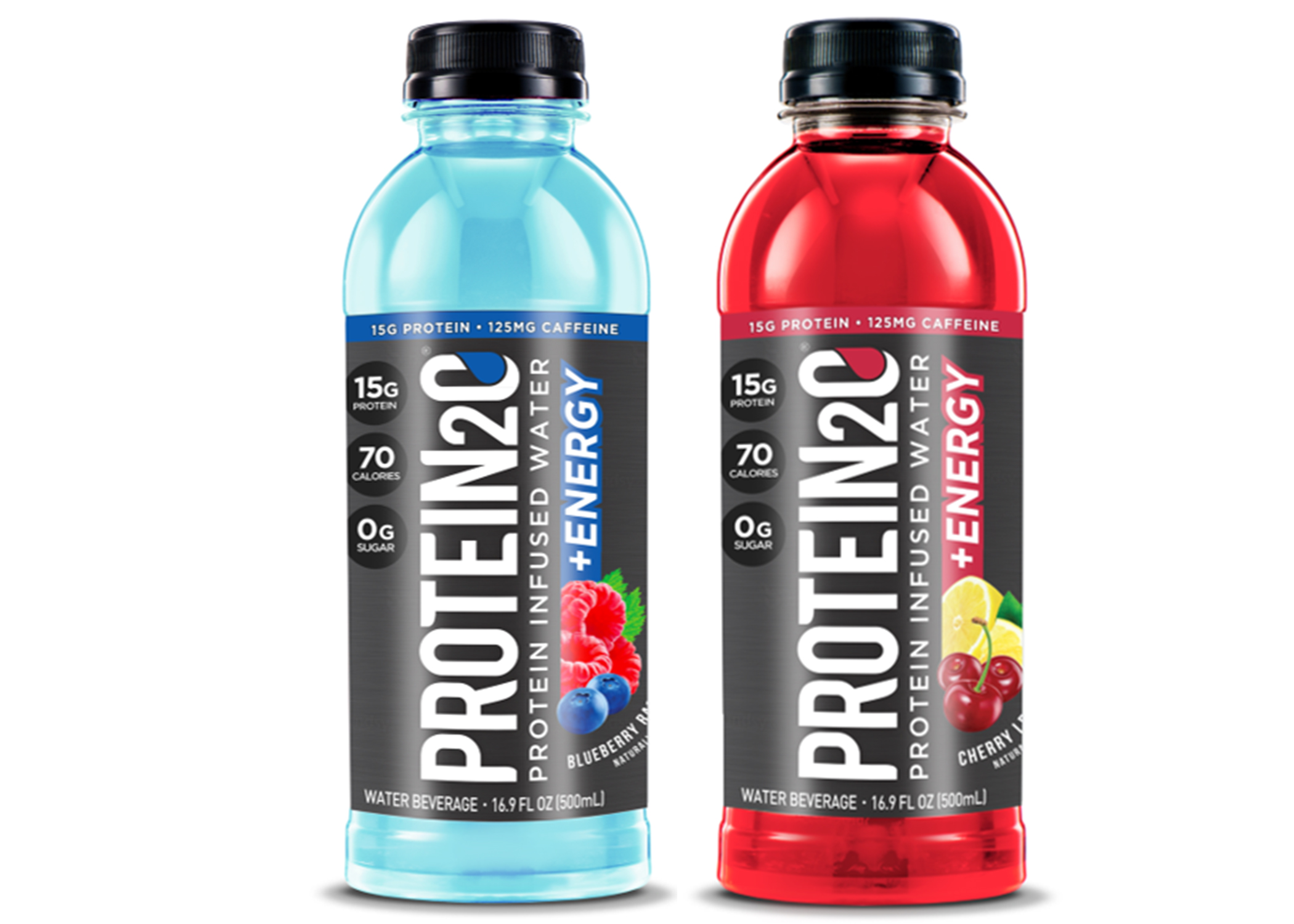
Country’s biggest metro may have been a bit behind on booch acceptance curve, but it’s getting influx of new and revamped hard kombuchas. As reported, Anheuser-Busch InBev’s Kombrewcha brand just undertook sweeping restage that upped ABV and segued from glass bottles to cans, with new look being sold into NY accounts this winter by its DSD partner, the unaligned distributor SKI. But Kombrewcha is getting company. Arizona-based Wild Tonic – a jun, or honey-based kombucha – has just enlisted via Oak Beverage to pick up its hard kombuchas packed in striking cobalt-blue bottles (with its NA range a possibility down the line). And word is that Calif-based Flying Embers is close to establishing NY presence, possibly via indie Sheehan operation. This in major market that’s only had sporadic availability of alc kombuchas like Unity Vibration, out of Mich, and Kombrewcha, whose now-repudiated lower-alc recipe was turnoff to some bar owners. City has had no homegrown alc-kombucha players that have shown any staying power so far, and even on NA side local players remain few and far between. Step-up in activity in NY echoes broader expansion around US as alc entries seek to ride in draft of awareness fostered mainly by NA entries to date.
At taphouse in NY’s Tribeca nabe where Wild Tonic and Oak kicked off NY launch last night, Wild Tonic sales execs Dave Toms and Byron Fiss described plan by which they’re seeding their alc kombuchas with DSD players around US, who’re then welcome to pick up NA entries too, which otherwise go out to market via broadliners like UNFI, KeHe and SuperValu in Northwest. The brand is out on draft and in 16-oz glass bottles in NA and 4.5% ABV entries, as well as in elegant, cork-stopped 750-ml bottles with 7.5% ABV. Wild Tonic has been aiming at mid-sized houses where newfangled brand might be able to get good focus, with DSD recruits including likes of Glunz in Chicago and Full Clip in Tex. Tho Wild Tonic carries particular education burden of explaining not just kombucha but specific jun variant, Toms and Fiss said it’s being embraced by retailers who feel their beer sets are crammed with too many IPAs and welcome something genuinely new. At event, Oak brand mgr Andrew Wepner told us Wild Tonic seems to strike chord with younger consumers who otherwise drink high-ABV beers in quest for a buzz with minimum carbs. And with rising awareness of colony collapse crisis affecting bees, Wild Tonic’s jun style also seems to resonate. Founder Holly Lyman, who missed party because she was kicking off Hawaii, has been cultivating her own bees to supply Wild Tonic. By now, the alc versions are available in 43 states just one year into their existence; the NAs have been out 3 years and are available at accounts like Sprouts in Calif and Ariz.
Meanwhile, canned Flying Embers line created by KeVita founder Bill Moses seems off to flyin’ start. It quickly entered Reyes’ Harbor Distributing in Southern Calif, near its home base (Flying Embers name riffs on wildfires that were endangering co’s Ventura brewery) and now has inked partnerships with Columbia Distributing and Crescent Crown, with partners in Texas and Northeast imminent, Bill told us today. As for Kombrewcha, as reported, it’s heading into Pacific Northwest via contingent of 6 Bud houses working coastal regions including Portland and Seattle. So it might not be long before we start regularly seeing distinct shelf sets of alc kombuchas, rather than seeing them dispersed among beers, ciders or NA kombuchas.
Few Kombucha Players Crossing Alc/Non-Alc Divide? Reminiscent of Hard Soda It’s been interesting phenomenon: alcoholic kombuchas that have embarked on national expansions are by and large separate brands and companies from those who’ve built NA category, with exception of GT’s, which offers low-alc entries alongside its NA entries. Otherwise, leaders on NA side have been brands like Health-Ade, Brew Dr, Humm, KeVita and Suja that all play just on NA side, while alc entries are going out under brand names like Boochcraft, Kombrewcha, Wild Tonic and Flying Embers. (Wild Tonic has made NA line a lower priority vs finding DSD partners for the alc entries.) That divide may seem odd, but it’s pattern we’ve encountered before in once-booming hard soda category and now in hard seltzers. Even as beer cos’ hard soda brands like Not Your Father’s Root Beer ignited for a coupla years, few existing natural-soda brands forayed hard entries and those that did, like Jones Soda, quickly pulled them back. Hard seltzer segment seems to be playing out similarly, with major brands from NA side like Polar, La Croix and Spindrift staying on sidelines, while separate cohort of brands goes out on alc side.
Pepsi-Cola Adds Nitro Flair in Continued Efforts to Elevate Familiar, and Flat-Trending, Soda Brand
PepsiCo is jumping aboard nitro bandwagon that’s done so much to invigorate coffee biz, showing prototype of nitrogenated Pepsi-Cola to upscale media like Food & Wine in Signature and Vanilla flavors. The move continues efforts to elevate mainstream soda, in this case by having it served in glass without a straw and not over ice as sippable refresher that doesn’t rely on carbonation for its effect. Other efforts along those lines have included fostering food pairings and opening Pepsi-themed lounge in NY’s trendy Meatpacking District. “Cola has been the same for 125 years as a category and yeah there's been changes in flavor and packaging, things of that sort, but the idea of carbonation has never really come off of it because it's so identifiable with soda,” marketing vp Todd Kaplan told Food & Wine. “As we started getting into this process with putting nitrogen in, Nitro Pepsi came about. It’s a really unique taste profile, it’s silky and smooth, it’s creamy, it’s got a very different mouthfeel . . . It’s undeniably Pepsi, but it’s not soda.”
Cold-brewed coffee style is getting some national TV exposure via new ad from Dunkin’ Brands featuring Boston Bruins’ prolific scorer David Pastrnak using his 2 minutes in penalty box to refuel. After winger is nabbed for tripping, staffer at Dunkin’ counter conveniently located right in penalty box commiserates, “Tough call, Pasta. Large Cold-Brew?” “Better make it a medium,” he responds. “I only have 2 minutes.” “Wow, she knows your order?” asks MacBook-wielding analyst seated nearby. “Yeah, I’m pretty much a regular here,” Pastrnak replies. Ad, which prominently shows draft handles going into all Dunkin’ stores, will debut during All Star Game tomorrow evening and go out broadly on social media channels, too. Dunkin’ rep told us it’s national buy that will air thru rest of season on NBC, NBC Sports Network and NHL network. Agency is BBDO, NY. Dunkin’ is official coffee, donut and breakfast sandwich of NHL. Ad can be viewed here . . . Coca-Cola will use Super Bowl ad airing just ahead of national anthem to take a stab at lessening nation’s divisiveness under rubric “A Coke is a Coke is a Coke,” channeling famous Andy Warhol observation. Animated spot from Wieden & Kennedy (with animation from Psyop) shows broad range of people and other creatures who enjoy Coke. “The timeless message of the spot is especially relevant today given what’s happening in society, and we hope it will resonate with viewers as they come together as a country to sing our national anthem,” said Brynn Bardacke, vp for content & creative excellence at Coca-Cola North America. (At one point in ad, gorilla figure subtly takes a knee – but it’s to present bouquet to woman standing nearby.) MediaPost has posted ad here.