



Beer Marketer's Insights
CBD FOLO UP: Dirty Lemon Wasn’t a One-Off: Other Bevs, Edibles Shop Got Recent FDA Visits
We reported Mon that FDA last week raided several unidentified production sites for CBD entry that had been briefly on offer from Dirty Lemon brand (BBI, Dec 21). Selection of Dirty Lemon seemed ironic, considering that co already had announced it was withdrawing product (and in fact, FDA’s agents turned up no CBD items in search because they’d already been destroyed, Dirty Lemon parent Iris Nova told us). But it seems this was more than a peculiar one-off: copacker we know has told us he was approached by rep for other bev brands whose production sites out west had received FDA visits around same time, and reader has forwarded us link to Phoenix New Times article about FDA bust on Jan 3 of Yuma, Ariz, smoke shop in which agents confiscated edible CBD items. So for marketers who’re still riding high over passage of Farm Bill, the key takeaway would seem to be: you might not want to come in quite yet, because the water’s not fine.
Down in Yuma, shop owner told New Times he was visited by 3 FDA agents plus officers from “another enforcement unit” that he couldn’t recall, who pulled items from shelves (but not from his back inventory) after seeming to take pains to verify that they were being sold as human-edible items. Canna Law Blog, which picked up story last week, said it squares with what it’s been warning about FDA stance, which it’s previously paraphrased this way: “Just because industrial hemp is legal doesn’t mean that you can put it in food or call it medicine.” We reached out to FDA this week but agency said it can’t discuss ongoing investigations.
Calif Legislature Eyes End Run around FDA and State Health Dept How will this play out? In Calif, where some of enforcement actions occurred, Sacramento Business Jnl reported that state legislature is considering bill that would allow sale beyond dispensaries of hemp-based products in bevs, foods and cosmetics. As paper pointed out, this is occurring after Calif Dept of Public Health has backed stance of FDA and its commissioner Scott Gottlieb, saying CBD products in food would be prohibited unless FDA changes rule. Bill’s sponsor, Assemblywoman Cecilia Aguiar-Curry, points to broad availability at retail of CBD items, saying, “We are hopeful that the actions taken in the farm bill will nudge the FDA toward greater acceptance of CBD.”
Starbucks allayed some growth concerns with strong performance in first qtr, with US store traffic improving sequentially and China biz rising 18%, for “espresso-fueled” start to new year, per Wells Fargo’s Bonnie Herzog. Net revenues grew 9% to $6.63 bil, but operating income dropped 9% to $1.01 bil. Among key metrics watched by investors, Starbucks Rewards loyalty program grew its active user base by 14% to 16.3 mil customers.
By segment, net revenues in core Americas biz grew 8% to $4.6 bil, on 4% growth in same-store sales and opening of 807 net new stores. Operating income rose 3% to $1 bil. So all in, Starubucks merely broke even in rest of world. While transactions were flat, the same-store sales boost got a lift from register rings that were 4% higher. Three of those 4 points came from bevs, led by espresso and brewed platforms, said cfo Pat Grismer. To Wells Fargo’s Herzog, the flat traffic pattern, reversing a 1% decline the prior qtr, “is an important step in the right direction, as we believe that it will be imperative for SBUX to truly fix its traffic problem in the US for the stock to work long-term.”
As co has noted in recent qtrs, US coffee shops’ performance is being buoyed by tilt toward cold drinks that have appeal across dayparts rather than mainly in morning. “The focus of our latest beverage innovation evolves around iced espresso, draft Nitro beverages and Refreshers,” ceo Kevin Johnson told investors. “We have expanded the deployment of our Nitro offering from about one-third of U.S. company-operated stores last quarter to 40% in just 1 quarter, and we remain on track to reach our goal of 100% penetration by the end of fiscal 2019. Draft Nitro beverages represent a significant opportunity for the brand. This platform is differentiated, provides theater and drives incrementality.”
In China/Asia Pacific, revenues soared 45% to $1.2 bil, driven by ownership change in East China, 1,010 net new stores openings and 3% rise in same-store sales. Operating income in CAP rose 13% to $221.5 mil. As for Channel Development Group, which includes packaged products from bagged coffee to bottled Frappuccinos and Teavanas, that sagged 20% because of exit of chunk of revenues to Nestle via massive new licensing deal for CPG and foodservice channels, as well as sale of Tazo tea brand. So that one’s not apples-to-apples at all.
Still, “Starbucks Is Basically a China Stock Now,” as Bloomberg headlined story, and that was focus of most questions from Wall Streeters on call yesterday afternoon, with many clearly concerned about inroads being made by local rival Luckin Coffee via its emphasis on easy pickup and delivery rather than spending heavily on plush environments where customers can hang out. That co has opened 600 stores in barely 6 months. SBUX brass responded, in essence, that they’re building for long term in contrast to rivals who’re engaged in unsustainable promos that require frequent rounds of new capital to support.
No Further Insight into Scaleback of Reserve Store Buildout Yesterday’s discussion offered no detailed discussion about product innovation, coming off presentation at Beverage Digest conference heralding “biggest innovation year” and investor day at which innovation also was focus (BBI, Dec 10 and Dec 14). Nor were there any mgmt comments or analyst questions about apparent move by Johnson to scale back plans of former ceo Howard Schultz to open 1K Starbucks Reserve stores as way of maintaining co’s coffee-geek cred vs third-wave rivals. As Wall St Jnl first reported, Johnson wants to better prove out the economics before pursuing that goal. Apogee of Reserve stores are the massive Roastery operations that just were augmented with store in NY; next one will open in Tokyo on Feb 28.
More Ad Buys Due in Future? Will we be seeing more of Starbucks on airwaves and billboards this coming year? In interesting exchange at end of q&a, Cowen & Co analyst wondered how much TV campaign may have contributed to strong US holiday season. Roz Brewer, coo and group prexy for Americas, termed the media spend “a benefit for us” and indicated the ads – which featured store employees – were likely to foster a rebalancing vs heavy reliance on forging 1-to-1 relationships with consumers via digital media. So “you will see us do a better balance of out-of-store and digital than what you’ve seen in the past,” she said.
Watchful Waiting on CBD Indie coffee houses may be flogging CBD oil as lucrative add-in but Starbucks seems nowhere close to going in that direction. Speaking on CNBC’s Squawk on the Street show this morning, ceo Johnson said, “We’re staying focused on the beverage innovation that we’re driving and right now it is all about Nitro . . . We’re going to keep watching this, but right now, it’s not on the road map.”
Long Blockchain Corp apparently has found a buyer for what once was its core biz, Long Island Iced Tea, before it veered into cryptocurrency realm. Vancouver-based co called ECC Ventures 2 Corp has signed LOI to acquire unit for $500K Canadian and 9.2 mil ECC shares after that co completes share consolidation, per gov’t filing spotted by news outlets . . . Mixer player Q Drinks is dialing up its reachout to influential mixologists, expanding its Highball’r tour from 18 cities in its inaugural year of 2018 to 45 cities this year. Among key stops on tour will be Arizona Cocktail Weekend, Thirst Boston, Bar Convent Brooklyn, Tales of the Cocktail (in New Orleans) and Portland Cocktail Week. Invitation-only events invite out-of-town bartenders on tours of host city and guest shifts at key local bars . . . “Is this a viral marketing stunt, or has our dystopian future arrived?” asks Eater site about “somewhat dubious” Reddit post that pair of furloughed federal workers are surviving solely on Soylent meal replacement bevs in order to be able to afford to feed their infant child. “Soylent has financially saved my family’s life,” poster wrote, referring to 35% discount that Soylent is offering furloughed workers. As Eater noted, skeptics have observed that all-Soylent diet actually is not cheapest way to survive, at over $10 a day even with discount. Soylent rep told Eater that by ordering co’s powder rather than RTD, an adult can be fed for just $5.92 per day. (BBI editor recommends diet of spaghetti and ketchup that he survived on for a year after getting his first apartment in his teens.)
Anheuser-Busch InBev’s Kombrewcha low-alc hard kombucha has gotten harder. As part of broad pivot that included move from glass bottles to cans, NY-based brand that first pivoted from 2.5% ABV (enough to get “tickled not pickled,” per original tagline) to 3.2% ABV under ABI ownership, now has headed to more robust 4.4% alc content. It’s also moved in more sophisticated, upscale direction in recognition that core consumer is more settled female than the partiers at hipster outposts like Brooklyn’s Roberta’s Pizza who were originally envisioned as target. Tho brand created by entrepreneur Ariel Glazer and Honest Tea cofounder Barry Nalebuff has always played on alc side, its evolution seems to reflect how marketers are groping to settle on right mix of recipes and occasions in broader kombucha category that’s still far from mature.
Kombrewcha’s moves were outgrowth of extensive consumer research that suggested its marketers had misidentified their core consumer as those 20-something partiers when it more often is women age 28-45, often married and with kids. That suggested that a tradeup in sophistication would be warranted, along with greater emphasis on brand attributes like its organic ingredients. Also emerging from the research was that core usage occasion is what ceo Garrett Bredenkamp termed “mindful occasion,” as when a woman meets up with her pals for quick midweek drink. Entry that’s refreshing, carbonated, natural/organic and with full flavor best meets that bill. “Initially, we thought that we’d convert beer drinkers to hard kombucha,” Garrett said. Ideal target turned out to be “female wine drinkers who already knew kombucha.” Flavor lineup remains Royal Ginger, Lemongrass Lime and Berry Hibiscus, with additional flavors likely due in late summer or fall.
As refresher for those living active lifestyle, move into cans seemed logical, Bredenkamp noted. So move is being made from 4-packs of 12-oz glass bottles to 6-packs of 12-oz cans. With SRP of $11.99, the 6-pack offers wholesalers about triple the margin they can count on from Bud Light, Bredenkamp said. New graphics treatment using curlicued font for Kombrewcha brand name was intended to herald brand that’s mindful, inviting, elegant and natural.
Recall that under ABI control, brand had initially confined itself to NY, via indie house SKI, and Miami, via local Bud shop (BBI, Dec 21 17). But South Fla still is low-per-cap kombucha market and that test lasted just 6 months. So now Kombrewcha is going to fish where the fish are, heading in Mar to Pac NW, where kombucha consumption is highly developed. Brand has enlisted 6 Bud wholesalers in coastal areas of Wash and Ore, several of whom already have been doing well with non-alc kombucha brands. Effort is being supported by opening of office in Portland with at least 3 staffers. In that region, brand has been embraced by banners like Safeway, QFC, Fred Meyer, Total Wine and Whole Foods. In NY, brand will remain with SKI, which Garrett credited with doing solid job, late next month adding Trader Joe’s banner to complement Whole Foods chain that’s proved enthusiastic proponent of brand and supported latest pivot, Bredenkamp indicated. Brand continues to be produced at ABI-owned Blue Point craft brewery on Long Island.
Count Boston-based gizmo maker Bevi as another bev play that pulls in capital at Silicon Valley scale. Bevi concluded a $35.5 mil Series C financing round that brings its total haul so far to over $63 mil, Xconomy Boston reported this week, as it builds out its internet-connected kiosks that have found a place in offices of customers like Apple, GE and Netflix – 370 customers all told. Round was led by Bessemer Ventures, with earlier investors Horizons Ventures and Trinity Ventures both participating as well. With consumers’ bev preferences all over the map, one technical challenge Bevi is working on is improving their ability to get to their ideal recipes and to allow the machines to recall those preferences, whether via phone apps, badges or radio-frequency-tagged bottles, as cofounder/ceo Sean Grundy told Xconomy.
Gratitude Health, the bevco set up by bev vet Roy Warren and Inko’s White Tea founder Andy Schamisso, has broadened line beyond its Dragon Well Green Tea to includes organically certified KetoRefuel line – billed as “world’s first RTD line of ketogenic meal-replacement shakes.” The shakes deliver macro- and micronutrients in scientific balance of healthy fat, protein and carb ratios, per the co based in NY and Palm Beach Gardens, Fla. Gratitude has set Q2 as launch date for line, breaking in Chocolate, Vanilla and Caffeinated Mocha flavors in 16.9-oz resealable Tetra Pak boxes, at pricing still to be determined. Distribution strategy likewise is still being worked out, said Andy, who serves as prexy/coo while Roy serves as brand mgr.
Elmhurst Dairy continued to build out its oatmilk presence, adding Milked Oats entry to Barista entry that was unveiled last fall at Expo East. Due for unveiling at Natural Products Expo West in Mar will be an Unsweetened version, said booth staffers at co built on brand of century-old dairy that closed a few years ago. Milked Oats, packed in same 32-oz cartons as rest of line, is prominently flagged as containing just 5 ingredients, like the existing Barista entry, in keeping with line’s “Simpler. Better” mantra. It’s also flagged as containing 20 g of whole grain. “Made with oats, not oils,” herald marketing materials. The Unsweetened sku will similarly boast of 20 g of whole grain, and just 3 ingredients.
It may have been quiet over past coupla years, but Lucky Jack nitrogenated cold-brewed coffee brand has been making steady headway expanding its grocery footprint, tilting its single-serve-only product line to include 32-oz concentrate line and expanding production capacity to point where it can now support $25 mil in wholesale sales, at time some rival brands sometimes struggle to find adequate line time at outside copackers.
We received update yesterday from ceo and co-owner Giancarlo Chersich, longtime biz partner of fitness guru and entrepreneur Jillian Michaels, co-owner of Lucky Jack, and co’s sr sales dir Ryan Sowards. We got help setting up interview from Lucky Jack investor/advisor Hal Kravitz, a former Coca-Cola exec and Aquahydrate ceo (Chersich and Michaels are Aquahydrate investors, too).
In increasingly crowded cold-brew sector, Lucky Jack is perhaps most distinctive for its 10.5-oz glass bottles with a steel pull-cap that Chersich believes offers a unique tactile experience while protecting the nitro effect. (Tho the cap has sometimes flummoxed consumers who ignore opening instructions, co is close to transitioning to more easily manipulated aluminum version, Giancarlo said.) It’s also seems to be among dwindling cadre of cold-brews that focuses exclusively on non-creamed offerings, as rivals like Rise Brewing defect from black-only stance after concluding that too many consumers want their coffee with both cream and sugar. Chersich isn’t buying that argument, and co in fact has eliminated a hempmilk-augmented entry called Mary Jane. “There are enough people in the world who just drink black coffee,” he said. Of course, richness and low bitterness of cold-brew is most noticeable when it’s consumed without cream or sugar.
Recall that Chersich and Michaels acquired control of Las Vegas-based co in Jan 2016. Tho Giancarlo offered glimpse of strategy to BevNet Live audience that year (BBI, Jun 16 2016), he and his team have stayed below the radar since then. He told us that’s partly because he’s vying vs deep-pocketed brands, some of them owned by big bevcos, as Blue Bottle and Chameleon are by Nestle. But it’s also because there was lots of tidying up to be done: cleaning up excessive deals for free fills and the like, rethinking distribution strategy, and moving beyond essentially manual operation at co’s self-operated plant. Within 6 months, Chersich said, plant had been certified as SQF2; co also mechanized fill process and expanded plant to nearly 30K sq ft to point where it can support $25 mil in wholesale sales, offering considerable runway. Its in-house cold-storage area can house nearly 200 pallets of product.
Lots of action has occurred on product side too. Co transitioned line to certified-organic status as key attribute consumers are seeking in higher-end brews like Lucky Jack, along with glass packaging and nitro effect. With single-serve RTD segment turning into ferocious battle on pricing and shelf positioning, co moved to add 32-oz concentrate biz, putting it on par with rivals like Chameleon that play on both sides. “There’s no way I can grow our business only with ready-to-drink – there’s not enough margin” given the increasingly promotional nature of category. The concentrate goes out at $9.99-11.99 for 10 servings vs Chameleon’s 8 servings – a great value of just $1 per cup for organic coffee, Giancarlo noted. (That said, frequent promos means Chameleon frequently undercuts even Lucky Jack’s price. BBI editor just purchased one in NY for $8.99.) Tilt toward concentrate helps ease reliance on increasingly promo-ridden RTD segment in which “people are not doing sustainable pricing,” Chersich argued.
As noted, Lucky Jack lineup is comprised of black coffees, on theory that “people dress their cold-brew the way they want” by adding their own dairy or dairy-alternative, if desired. But there also are practical reasons: plant has been set up as dairy- and nut-free environment. Lineup includes unsweetened Old School Nitro; espresso-spiked Triple Black Nitro; cane-sugar-sweetened Sweet Thing, and Lean Bean, lower-calorie entry melding cane sugar and stevia. Also in mix are the concentrates and 5-gal kegs.
On retail side, co entered Kroger chain with 32-oz concentrate and 2 of its single-serves last Aug, 1,235 stores all told under QFC, Fred Meyer, Fry’s, Smith’s, Ralph’s, King Sooper and Kroger banners. It recently entered 165 Jewell Osco locations in Chicago with its 3 top-selling sku’s – Triple Black, Old School and Sweet Thing – joining Safeway roster that includes Albertsons and Safeway banners. Characteristic of activation efforts, Michaels will host Coffee 101 session at Jewell store in affluent Naperville suburb – unit regarded demographically as “Lululemon store,” Chersich noted drily. Publix has approved 3 single-serves and a 32-oz concentrate for Mar. By now, Lucky Jack is in Whole Foods’ South Pacific (SoCal), Rocky Mountain, Florida and NY divs, with hopes to expand this year. It’s also in Target’s Calif stores.
So far, its DSD partnerships are confined to Dora’s Naturals in NY and Hi Touch in Southern Calif. Sowards said co is open to expanding that footprint, but must balance that against fact that co is still staffed tightly. It’s about to enter redistributor Dot Foods. about to enter redistributor Dot Foods. 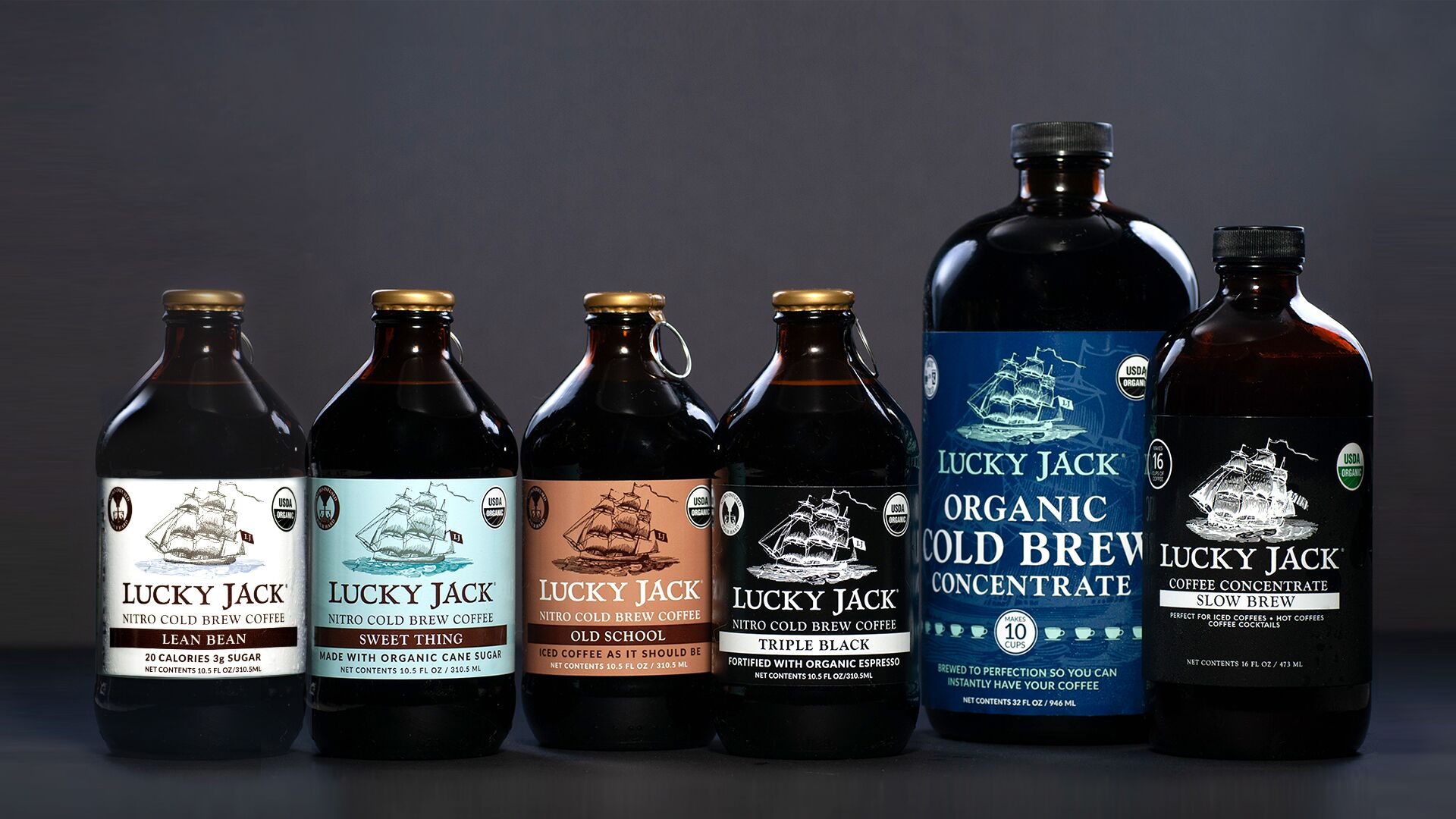
PEOPLE: Califia Farms Recruits Longtime Pepsi, Dean Foods Exec Pappas as Chief Commercial Officer
Peter Pappas, who spent 17 years in sales & marketing roles at PepsiCo before heading off to roles at SABMiller, Dean Foods and Advantage Sales & Marketing, has been recruited by Califia Farms for newly created role of chief commercial officer, apparent #2 to founder/ceo Greg Steltenpohl. That fills key role that LA-based co was known to be discussing for about a year now. In post on his LinkedIn page this week, Peter said, “I'm humbled and excited to start my next career chapter as the Chief Commercial Officer at Califia Farms. An innovative, mission driven, consumer focused and people first organization driven to deliver delicious, nutritious plant based beverages to consumers across the globe. The journey begins today!” He’s among several other new hires that Califia Farms seems to be planning to announce soon.
In his role, it’s presumed that Pappas will be tasked with fostering profitable growth of fast-expanding portfolio of plant-based dairy-alternative, coffee and juice entries, with co doing much to revitalize what had been static dairy sections in stores, even as it’s struggled at times to keep production at its Bakersfield, Calif, plant up to demand. As reported, it’s going live with massive new coffee roasting facility in downtown LA’s The Row complex in partnership with Tartine Manufactory (BBI, Dec 18) even as it continues to penetrate new segments. At recent Fancy Food Show, co made its entry into booming oatmilk segment, with Oat Barista Blend due in Feb in line’s aseptic boxes, with Unsweetened Oatmilk in carafes to follow in Apr (BBI, Jan 10).
2-Year Development Effort Yielded Whole-Grain Oatmilk That’s Lower in Sugar; Part of Broader Sugar Reduction Initiative at Co At show in SF, Steltenpohl noted that raft of recent oatmilk entries was facilitated by expiration of key Oatly patent a year ago. Califia’s own development effort goes back before that, about 2 years. It was able to develop lighter process with more of the whole oat present compared to those who spin off the fiber in a centrifuge, supporting “whole grain” description. Califia entry comes in lower in sugar, 3 g per serving vs Oatly’s 4 g. It’s produced with pair of unidentified partners in Calif and in Midwest. Califia’s coffee gm, Brian Lovejoy, noted that this was part of broader effort within co to cut sugar content by 25% on all coffees and almondmilks (as well as to eliminate all robusta coffee beans from mix). Tho Oatly opened door to oats as major trend at indie cafes, that didn’t stop Califia’s oatless Barista Blend lineup from tripling since 2015 even as it weathered some production squeezes; within foodservice channel it’s tripled just over the past year. All this has occurred even before significant marketing has kicked in. Lovejoy’s conclusion: tho co is optimistic that oat-based Barista Blend entry will make inroads, there’s still plenty of growth left in the almond-based entries.
Starbucks isn’t only coffee roaster that’s having to learn to behave more respectfully in its dealings with patrons of color. In Twin Cities, often viewed as bastion of tolerance in Upper Midwest, Blackeye Roasting has been enduring its own ordeal after barista at its shop in gentrifying South Side confronted customer who was handing out newsletters. Customer turned out to be black and transgender vice president of Minneapolis City Council named Andrea Jenkins, who was to return this week to café to convene forum on race relations, as StarTribune paper reported. Blackeye Roasting mgrs quickly “fired the barista, who has not been named, for inappropriately confronting Jenkins and making others feel unsafe,” as paper reported. Incident bore uncomfortable resemblances to notorious incident last Apr in Philadelphia Starbucks store, where pair of black men were arrested without justification. SBUX took step of closing all its stores a few months later to conduct sensitivity training program for staffers.
Controversy in Twin Cities comes at time of considerable change at Blackeye, ambitious operator that’s mustered well-regarded RTD line that migrated to shelf-stable can and was moving into protein realm too, all while opening expansive production site that was cultivating outside biz in segment that’s been squeezed for copacking capacity (BBI, Jul 13 2017 and Jan 18 2018). From what we’ve heard, its founder Matt McGinn has moved on from day-to-day operating role, with mgmt activities taken over by core investor the Morrissey family, which operates local Bud house Capitol Beverage. (We’ve reached out in recent weeks to discuss new strategy but not heard back.) As for McGinn, his LinkedIn page shows him to have headed to Woodland, Calif, last Sep to cofound Nectr Infusions, a licensed cannabis bev maker. It’s not immediately clear what status is of a side project of McGinn’s, Bad Larry’s, a canned alcoholic cold-brew.